

nfertility myths and facts about AMH, PCOS, male fertility, IVF, and fertility treatment in Nepal
Blog Details
- Home
- Blog Details
Infertility Myths and Facts in Nepal: What Couples Should Actually Know
Quick Answer
Infertility affects an estimated 1 in 6 people globally during their reproductive years, according to the World Health Organization (WHO), and Nepal is no exception. Hospital-based studies in Nepal show comparable rates, with male factors identified in roughly 37–47% of infertility cases. These factors may be linked to conditions such as heat exposure among Nepali migrant workers. No single test, regular menstrual cycle, or history of a previous pregnancy can reliably predict whether someone can conceive. Most infertility myths, in Nepal and around the world, fail for the same reason: they reduce a complex, multifactorial medical condition to one simple cause—or place the blame on one person.
Introduction
In Nepal, infertility is still something many couples are more likely to whisper about than discuss with a doctor. One relative may suggest simply relaxing more. Someone else may assume, often wrongly, that the problem must be with the woman. Cultural pressure to conceive soon after marriage can add to the urgency, while stigma keeps many couples from seeking help for years before they finally consult a specialist.
That silence comes at a real cost. It can delay proper fertility evaluation and lead to unfair blame being placed on one partner when the cause may lie with the other partner, both partners, or remain unexplained. It can also push people toward unproven remedies instead of evidence-based fertility care.
There is another important point that is particularly relevant in Nepal: peer-reviewed research from Nepali hospitals has identified male factors as a substantial contributor to infertility cases. Some studies have also reported sperm abnormalities among men exposed to occupational heat, including Nepali men working abroad. These findings highlight why fertility information written for a global audience may not always address the social, occupational, and healthcare realities faced by couples in Nepal.
This article examines the most common infertility myths encountered in Nepal, drawing on current guidance from the World Health Organization (WHO), the American Society for Reproductive Medicine (ASRM), and the American College of Obstetricians and Gynecologists (ACOG), and peer-reviewed research from Nepal. Rather than assuming that global findings apply unchanged to every couple, it considers the evidence in the context of Nepal.
Quick Infertility Myths and Facts in Nepal
Infertility Myths and Facts in Nepal, Explained
Myth: Infertility Is Rare, So Something Unusual Must Be Going On
Direct answer: No. Infertility is common, not rare.
The World Health Organization (WHO) estimates that about 1 in 6 people experience infertility during their reproductive years. In the United States, CDC data estimates that around 13% of women aged 15–49 have impaired fecundity. These are not unusual or isolated numbers. Infertility affects many people and is something that couples may experience themselves or encounter among family and friends.
So why does the myth persist? One reason is that infertility is often not discussed openly. When people rarely talk about it, the condition can appear much less common than it really is. Silence, rather than scarcity, can keep this misconception alive.
If you have been trying to conceive without success, remember that seeking a fertility evaluation is a normal and appropriate step. It does not mean something unusual is necessarily wrong, and you do not have to face the uncertainty alone.
Myth: Infertility Is Mainly the Woman's Issue
Direct answer: No. Male factors are the sole or contributing cause in a substantial proportion of infertility cases.
According to the American Society for Reproductive Medicine (ASRM), male factors are the sole cause of infertility in about 20% of couples and contribute to infertility in another 20–30%. Taken together, male factors may contribute to roughly half of infertility cases. This is not a small minority, even though infertility is sometimes incorrectly assumed to be primarily a woman's issue.
Medically, one of the first ways to assess male fertility is through a semen analysis. The test evaluates key characteristics such as sperm concentration, motility, and morphology. It is generally noninvasive and relatively straightforward compared with many fertility tests performed on women, which is one reason male evaluation should not automatically be delayed.
A complete fertility evaluation should consider both partners from the beginning. Testing the woman first and evaluating the man only if no cause is found can create unnecessary delays and may postpone appropriate treatment.
Myth: Stress Causes Infertility
Direct answer: Not proven. Chronic stress can affect hormones, sleep, sexual health, and overall well-being, but current evidence does not establish stress as a direct or standalone cause of infertility for most people.
It is an understandable myth to believe. Trying to conceive can be genuinely stressful, and being told to “just relax” can make it seem as though stress is the reason pregnancy has not happened. However, fertility is influenced by many factors, and reducing stress does not necessarily resolve an underlying fertility problem.
Managing stress is still worthwhile for your overall health and emotional well-being. It can help you cope with the challenges of trying to conceive, but it should not replace a medical evaluation. If you have been trying to conceive without success for the recommended period or have a known fertility risk factor, talk to a fertility specialist to understand the next appropriate step.
Myth: If You Have Regular Periods, You Must Be Fertile
Direct answer: Not necessarily. Regular periods are a good sign that ovulation is likely occurring, but they do not rule out blocked fallopian tubes, uterine conditions, endometriosis, or male-factor infertility.
The key point to remember is that regular periods suggest that ovulation is occurring, but they do not confirm that the fallopian tubes are open, the uterus is healthy, or sperm function is normal. A menstrual cycle alone cannot provide this information.
If your periods are regular but you are still not conceiving after the recommended period of trying, a complete fertility evaluation may be appropriate. Regular cycles should not be taken as proof that everything is fine.
Myth: Age Only Affects Female Fertility
Direct answer: No. Age affects fertility in both partners, although the timing and pattern of decline are different.
Female fertility gradually declines with age and tends to decline more noticeably after the mid-30s. This is largely because women are born with a finite number of eggs, and both egg number and quality decrease over time.
Male fertility also changes with age. Sperm quality can decline gradually as men get older, and advancing paternal age has been associated with changes in sperm quality, DNA integrity, and some reproductive outcomes. These changes generally occur more gradually than the decline in female fertility, but the idea that men can father children at any age without any age-related changes is an oversimplification.
If either partner is over 35, it is reasonable to consider fertility timelines more carefully. This does not mean there is a reason to panic, but it is a good reason to avoid assuming that age has no effect on fertility.
Myth: Having One Child Means You Won't Have Fertility Problems Later
Direct answer: No. This is known as secondary infertility, and it is more common than many people realize.
Fertility can change after having a child. Age-related changes since the previous pregnancy, new conditions such as endometriosis or fibroids, changes in sperm health, weight changes, or complications from a previous pregnancy or delivery can affect the ability to conceive again.
If you have been trying to conceive for 12 months without success and the woman is under 35, a fertility evaluation may be appropriate. If the woman is 35 or older, an evaluation is generally recommended after 6 months of trying. A previous pregnancy does not rule out the possibility of fertility problems later.
Male Fertility Myths Couples Should Know
Male infertility carries a specific kind of stigma. It is often under-tested, under-discussed, and incorrectly assumed to be unlikely. These misconceptions can delay proper evaluation and treatment. Infertility in either partner is a medical condition, not a personal failing, and it should never be used to assign blame.
Myth: Men Can Remain Fertile at Any Age With No Real Decline
Direct answer: Not entirely true. Male fertility can decline with age, although the changes generally occur more gradually than those seen in female fertility.
As men age, sperm concentration, motility, and morphology may gradually change, while sperm DNA damage can increase. These age-related changes tend to become more relevant as men get older, particularly from the 40s onward. Research has also found that increasing paternal age may be associated with a longer time to conception and a higher risk of some reproductive outcomes.
Male fertility does not suddenly disappear at a particular age. However, the idea that men can remain equally fertile throughout life without any age-related changes is not accurate.
Myth: A Man Who Has Already Fathered a Child Cannot Be Infertile Now
Direct answer: No. Previous fertility does not guarantee that a man's fertility will remain unchanged. Sperm production and semen quality can change over time. Illness, certain medications, weight changes, heat exposure, smoking, alcohol use, and age may affect semen parameters, even after a previous successful pregnancy.
Myth: Men Do Not Need Fertility Testing Unless Something Feels Wrong
Direct answer: No. This is one of the most important myths to correct. Many men with abnormal semen parameters have no obvious symptoms. A semen analysis is a key first-line test for assessing male fertility and can provide important information about sperm concentration, motility, and morphology.
A semen analysis evaluates several aspects of semen and sperm health. The World Health Organization's 2021 reference values can provide useful context when interpreting results. However, these values are statistical reference points rather than strict pass-or-fail thresholds. A result above or below a reference value does not, by itself, determine whether a man can or cannot father a child.
These figures represent the 5th percentile of semen parameters observed in fertile men whose partners conceived naturally within one year. A single abnormal result does not, by itself, establish a diagnosis of male infertility. Sperm parameters can vary from one sample to another, which is why doctors may recommend repeating the semen analysis when the initial results are abnormal.
Sperm production takes approximately 74 days, although the exact time can vary. A repeat test may be recommended after an appropriate interval based on the initial findings and clinical situation.
Both partners should be evaluated when fertility problems are suspected. Male and female factors can occur separately or together, so assessing both partners early can help identify potential causes and avoid unnecessary delays in diagnosis and treatment.
Female Fertility Myths That Cause Unnecessary Fear
Several important distinctions are often reduced to a single number or test. It is worth stating these points clearly:
Ovarian reserve is not the same as overall fertility: Ovarian reserve is one part of fertility assessment, but it does not provide a complete picture of a person's ability to conceive.
Egg quantity is not the same as egg quality: Having a higher ovarian reserve does not necessarily mean that the eggs are of better quality. Similarly, a lower ovarian reserve does not automatically mean that egg quality is poor.
Regular periods do not guarantee fertility: Regular menstrual cycles can suggest that ovulation is occurring, but conception also depends on factors such as open fallopian tubes, a healthy uterus, and adequate sperm health.
A “normal” AMH level does not guarantee pregnancy: AMH can provide information about ovarian reserve, but it does not directly measure egg quality or confirm that pregnancy will occur. A normal result should be considered as one part of a complete fertility evaluation.
AMH and Ovarian Reserve Myths
This section deserves extra care because AMH is one of the most misunderstood numbers in fertility medicine.
AMH stands for Anti-Müllerian Hormone. It is produced by small follicles in the ovaries and can be measured through a blood test. Clinically, AMH is used to estimate ovarian reserve, which provides an indication of the remaining egg supply. It can also help doctors predict how the ovaries may respond to stimulation medications during IVF.
What AMH Can Tell You
AMH can provide a general indication of ovarian reserve relative to other people of a similar age. It can also be useful when planning an IVF stimulation protocol and estimating how many eggs may be retrieved.
What AMH Cannot Tell You?
AMH does not directly measure egg quality or the chromosomal health of eggs. It also cannot reliably predict whether someone will conceive naturally, whether IVF will result in pregnancy, or the exact number of eggs remaining in the ovaries.
According to guidance from the American Society for Reproductive Medicine (ASRM), AMH and antral follicle count have limited ability to predict outcomes such as egg quality, pregnancy, and live birth. They are more useful for predicting ovarian response and the number of eggs that may be retrieved during IVF than for predicting whether a pregnancy will result in a live birth.
Myth: Low AMH Means I Cannot Get Pregnant
Direct answer: No. A low AMH level does not, by itself, mean that natural pregnancy is impossible.
A low AMH level mainly suggests a lower ovarian reserve, which refers to the number of eggs that may remain in the ovaries. It does not necessarily indicate poor egg quality. Many people with low AMH can still conceive naturally, and AMH levels alone are not a reliable predictor of natural pregnancy. AMH results should be considered alongside other factors, including age, ovulation, fallopian tube health, uterine health, and sperm health.
Myth: Normal AMH Means My Fertility Is Guaranteed
Direct answer: No. A normal or high AMH level does not guarantee fertility. AMH does not directly measure egg quality or confirm that the fallopian tubes are open. It also does not assess uterine health or your partner's sperm health.
A normal AMH result can provide useful information about ovarian reserve, but it is only one part of a complete fertility assessment.
Myth: AMH Tells You Exactly How Fertile You Are
Direct answer: No. No single test can determine exactly how fertile someone is.
AMH provides information about one aspect of fertility, mainly ovarian reserve. The ability to conceive depends on several factors, including egg quality, ovulation, fallopian tube function, uterine health, sperm health, age, and other individual factors. AMH should therefore be interpreted as one part of the overall fertility picture rather than as a complete measure of fertility.
AMH Interpretation Table
The relationship is straightforward: a low AMH level may indicate reduced ovarian reserve, but ovarian reserve does not directly measure egg quality. Therefore, AMH alone cannot diagnose infertility. It should always be interpreted alongside your age, medical history, and other fertility test results.
If you have received an AMH result that you do not understand, ask your healthcare provider to explain what it means in the context of your age and other test results. AMH is one piece of the fertility assessment and should not be interpreted as a standalone number.
PCOS Fertility Myths
Polycystic ovary syndrome (PCOS) is one of the most common causes of ovulation-related infertility and one of the most misunderstood conditions in fertility care.
Myth: PCOS means you can't get pregnant
Direct answer: No. PCOS is a common, usually treatable cause of irregular or absent ovulation. It isn't a diagnosis of infertility in itself.
Many people with PCOS conceive naturally, particularly when ovulation occurs regularly or with appropriate support. For those who need treatment, first-line options such as letrozole and, in some cases, clomiphene can help induce ovulation before IVF is considered. ASRM and ESHRE guidance generally recommends addressing ovulation and other contributing factors before moving to IVF, unless there are additional fertility factors that make IVF appropriate earlier.
Myth: PCOS means you never ovulate
Direct answer: Not accurate. PCOS commonly causes irregular or infrequent ovulation, not a total absence of it for every patient. Patterns vary considerably from one person to the next.
Myth: Everyone with PCOS needs IVF
Direct answer: No. Treatment is individualized. Some people respond well to lifestyle changes and ovulation-induction medication alone. Others need more than that. A smaller group ultimately needs IVF, often when other factors are also in play.
Myth: Irregular periods automatically mean infertility
Direct answer: Not automatically. However, irregular or absent periods are a valid reason to seek a fertility evaluation sooner rather than waiting the standard 12 months. They may indicate an ovulation disorder or another underlying condition that should be evaluated and, in many cases, treated.
A PCOS diagnosis is a starting point for a treatment conversation, not an end point. Response to treatment varies a great deal from person to person, which is exactly why the plan has to be built around the individual, PCOS Fertility Myths.
Polycystic ovary syndrome (PCOS) is one of the most common causes of ovulation-related infertility and one of the most misunderstood conditions in fertility care.
Myth: PCOS Means You Cannot Get Pregnant
Direct answer: No. PCOS is a common and treatable cause of irregular or absent ovulation. Having PCOS does not automatically mean that you are infertile.
Many people with PCOS conceive naturally, particularly when ovulation occurs regularly. For those who need treatment, ovulation-induction medicines such as letrozole are commonly used as a first-line option. Clomiphene may also be considered in some situations. IVF may be recommended later when other treatments have not worked or when additional fertility factors are present. Treatment should be based on each person's individual circumstances.
Myth: PCOS Means You Never Ovulate
Direct answer: Not necessarily. PCOS commonly causes irregular or infrequent ovulation, but it does not mean that every person with PCOS stops ovulating completely. Some people with PCOS ovulate regularly, while others ovulate less often or unpredictably.
Myth: Everyone With PCOS Needs IVF
Direct answer: No. Fertility treatment for PCOS is individualized. Some people conceive without fertility treatment, while others may need lifestyle changes, ovulation-induction medication, or other treatments. IVF may be considered when other approaches have not been successful or when additional fertility factors make it appropriate.
Myth: Irregular Periods Automatically Mean Infertility
Direct answer: No, but irregular or absent periods should not be ignored. They can indicate irregular ovulation or another reproductive health condition that may affect conception. If your periods are irregular, it may be appropriate to seek a fertility evaluation sooner rather than waiting 12 months before asking for help.
A PCOS diagnosis is the beginning of a treatment conversation, not a final answer about your ability to have a child. Treatment response varies from person to person, which is why fertility care should be tailored to your symptoms, reproductive goals, age, and other factors that may affect conception.
IVF Myths and Facts
IVF is associated with many myths, partly because it is one of the most widely discussed fertility treatments. However, IVF is not always the first treatment recommended. The most appropriate approach depends on the cause of infertility, the patient's age, previous treatment history, and other individual factors.
Myth: IVF Guarantees Pregnancy
Direct answer: No. No fertility treatment can guarantee a pregnancy or live birth, including IVF. IVF success rates vary considerably depending on factors such as age, embryo quality, infertility diagnosis, and whether the eggs are from the patient or a donor.
Approximate live birth rates per embryo transfer using a patient's own eggs can vary by age and clinic. National data from organizations such as the CDC and SART can provide useful benchmarks, but individual success rates may differ.
Donor eggs can change this picture considerably because the likelihood of success is influenced strongly by the donor's age and egg quality rather than the recipient's age alone.
Myth: One Failed IVF Cycle Means IVF Will Never Work for You
Direct answer: No. IVF outcomes are assessed on an individual cycle basis. Many patients who do not conceive during their first IVF cycle may conceive during a later attempt. The information gained from the first cycle can sometimes help the fertility team adjust the treatment plan for subsequent cycles.
A failed cycle does not automatically mean that IVF will not work in the future. Your doctor may review factors such as ovarian response, fertilization, embryo development, embryo quality, and the uterine environment before deciding whether any changes to treatment are appropriate.
Myth: IVF Always Results in Twins
Direct answer: No. IVF does not automatically result in a twin pregnancy. Modern fertility practice often favors single-embryo transfer when appropriate because transferring one embryo can substantially reduce the risk of multiple pregnancy.
When a single embryo is transferred, the chance of twins is much lower than when two embryos are transferred, although identical twins can still occur. The decision about how many embryos to transfer depends on factors such as age, embryo quality, previous treatment history, and individual prognosis.
Twin pregnancy is therefore not an inevitable outcome of IVF. Your fertility specialist can discuss the safest embryo-transfer approach based on your individual circumstances.
Myth: IVF Permanently Damages or Uses Up Your Ovarian Reserve
Direct answer: No. IVF does not appear to permanently reduce ovarian reserve or cause the ovaries to run out of eggs faster.
During each menstrual cycle, a group of follicles begins developing naturally, but usually only one becomes dominant and releases an egg through ovulation. The other follicles normally stop developing and are naturally lost. Ovarian stimulation medications used during IVF help more of the follicles that have already begun developing in that cycle continue to mature.
IVF does not create additional eggs or remove eggs that would otherwise remain available for future cycles. Current evidence does not show that IVF accelerates the natural decline in ovarian reserve or causes early menopause.
Myth: IVF Is Always the First Treatment Offered
Direct answer: No. IVF is not always the first treatment recommended. Depending on the cause of infertility, treatment may begin with approaches such as ovulation-induction medication or intrauterine insemination (IUI).
However, IVF may be recommended earlier when there is a specific reason to do so, such as blocked or severely damaged fallopian tubes, severe male-factor infertility, certain fertility conditions, or other circumstances where less invasive treatments are unlikely to be effective.
The appropriate treatment depends on factors such as age, diagnosis, ovarian reserve, sperm health, previous treatment, and the couple's individual circumstances.
Myth: IVF Babies Are Less Healthy Than Naturally Conceived Babies
Direct answer: Not necessarily. Most children born after IVF are healthy, and assisted reproductive technology is not considered to be a simple cause of poor health outcomes.
Some studies have reported small differences in certain pregnancy or birth outcomes among pregnancies conceived through assisted reproductive technology. However, these findings can be influenced by factors such as parental age, the underlying cause of infertility, and the higher likelihood of multiple pregnancies.
For this reason, it is not accurate to assume that IVF itself makes babies unhealthy. Your fertility specialist can discuss the potential risks and benefits of treatment based on your individual circumstances.
Myth: Every IVF Patient Needs the Same Treatment, and Success Rates Are Identical for Everyone
Direct answer: No. IVF treatment is individualized based on factors such as age, ovarian reserve, previous response to stimulation medication, the cause of infertility, and previous treatment history.
A clinic's overall IVF success rate can be useful as a general reference, but it should not be treated as a personal prediction. Success rates can vary considerably between patients because fertility and treatment outcomes depend on individual circumstances.
If you are considering IVF, ask your clinic about success rates for patients in your age group and, where available, for people with a similar fertility diagnosis. It is also helpful to ask what factors may affect your chances of success and what the treatment plan would be if the first cycle is unsuccessful.
A trustworthy fertility clinic should explain both the potential benefits and limitations of treatment and help you understand what to expect at each stage of the process.
Nepal-Specific Context: Data, Stigma, and Locally Relevant Myths
The core infertility myths discussed above are also common in Nepal. These include the belief that infertility is mainly a woman's problem, that IVF guarantees pregnancy, that one failed IVF cycle means treatment will never work, or that regular periods automatically mean a person is fertile. What is important to add is the local evidence behind these patterns and the social and occupational factors that can influence how infertility is understood and managed in Nepal.
A note about the numbers is important because Nepal does not yet have a single, consistently established national infertility prevalence figure. Some Nepali fertility clinics cite an estimated infertility rate of around 13% to 15%, but these figures come from clinics or secondary sources rather than a confirmed nationwide population study. They should therefore be treated as estimates rather than definitive national statistics.
Hospital-based research provides additional context. A peer-reviewed study published in the Journal of Nepal Medical Association and conducted among couples attending a teaching hospital in Eastern Nepal reported a 5.45% incidence of infertility in that study population. Secondary infertility was more common than primary infertility, and male factors were identified in 37.39% of cases. The study also reported low sperm count and heat exposure among men working abroad, particularly in Gulf countries.
A separate study conducted at a tertiary fertility center looked specifically at patients seeking IVF treatment. It reported tubal factors as the leading cause of female infertility, accounting for approximately 52% of cases, while severe oligozoospermia was the leading male-factor diagnosis, accounting for approximately 47% of cases. These figures should not be treated as directly comparable with the hospital-based study because the populations were different. One examined couples attending a teaching hospital, while the other focused on patients already seeking IVF treatment. Neither should therefore be presented as the national infertility rate for Nepal.
Research from Gandaki Province has also highlighted the psychological impact of infertility. A case-control study reported higher levels of psychological stress and anxiety and lower social support among women experiencing infertility compared with women without infertility. These findings show why fertility care should consider emotional well-being alongside medical evaluation and treatment.
Overseas Work and Male Fertility in Nepal
Overseas employment is an important part of the lives of many Nepali families. For some men working in hot environments, occupational heat exposure may be relevant when assessing male fertility. Research has associated prolonged heat exposure with changes in semen quality, including sperm production and other semen parameters.
This is a workplace health issue, not a reflection of masculinity, personal failure, or poor health choices. When male-factor infertility is suspected, a semen analysis is an important part of the initial evaluation. It can assess key sperm parameters such as concentration, motility, and morphology. Further testing may be recommended when abnormalities are identified and the clinical history suggests another underlying cause.
The Nepal-specific evidence does not mean that overseas employment or heat exposure explains male infertility in every case. It highlights one potentially relevant factor that should be considered when taking a complete fertility history, particularly for men who have experienced prolonged occupational heat exposure.
Myth: Infertility Is Caused by Evil Spirits, Witchcraft, or a Curse
Fact: Infertility has many medical and biological causes, including ovulation disorders, hormonal conditions, blocked fallopian tubes, endometriosis, uterine conditions, and problems with sperm production or function. A clinical evaluation can identify many of these causes, and, in many cases, appropriate treatment is available.
This myth deserves more attention than a simple correction because, in Nepal, beliefs about witchcraft have sometimes had serious consequences for women without children. Research documenting witchcraft accusations in Nepal has identified women without children among groups that may be targeted, alongside widows and women from socially disadvantaged backgrounds. Such beliefs can contribute to social exclusion, stigma, and, in documented cases, violence. This is therefore not simply a harmless misconception. It can have real consequences for the people experiencing infertility.
Medical context: There is no scientific evidence that evil spirits, witchcraft, curses, or other supernatural forces cause infertility. Fertility problems can result from a wide range of medical factors affecting ovulation, the fallopian tubes, the uterus, sperm production, sperm function, or other aspects of reproductive health. A proper medical evaluation can help identify potential causes and determine whether treatment is available.
Safe next step: If a couple is facing accusations or pressure related to infertility, seeking a medical evaluation can provide objective information about their reproductive health. A diagnosis can help replace blame and speculation with evidence and a clear path toward appropriate care. If someone faces threats, violence, or serious harm because of these beliefs, their immediate safety should come first, and they should seek help from a trusted person or appropriate local support service.
Myth: Certain Foods or Herbal Remedies Can Cure Infertility or Unblock Fallopian Tubes
Fact: There is no credible clinical evidence that specific foods, herbal remedies, or dietary treatments can unblock fallopian tubes, correct hormonal imbalances, or treat sperm abnormalities.
Medical context: A balanced and nutritious diet can support overall health and well-being, but it cannot replace a proper fertility evaluation or medical treatment when an underlying fertility problem requires medication, a procedure, or surgery.
Safe next step: Talk to a fertility specialist before relying on supplements, herbal products, or alternative remedies for infertility. Be especially cautious about products or treatments marketed as a guaranteed or permanent “cure,” particularly when they encourage you to delay proven medical care.
When Should You Actually See a Fertility Specialist?
There is no single rule that applies to everyone. The right time to seek a fertility evaluation depends on age, how long you have been trying to conceive, and whether any known fertility risk factors are present.
By age, based on ASRM and ACOG guidance for couples with regular intercourse and no known risk factors:
Under 35: Consider an evaluation after 12 months of trying to conceive without success.
35 to 39: Consider an evaluation after 6 months of trying without success.
40 and older: Consider an evaluation without delay rather than waiting 6 or 12 months.
Regardless of age, an earlier evaluation may be appropriate if you have any of the following:
Irregular or absent menstrual periods
Suspected or diagnosed PCOS
Known or suspected endometriosis
A history of pelvic inflammatory disease, pelvic surgery, or suspected fallopian tube problems
Two or more previous pregnancy losses
Known or suspected male-factor concerns, such as previous groin or testicular surgery, a history of an undescended testicle, or previous chemotherapy
Previous fertility treatment that did not result in pregnancy
A medical condition or treatment that may affect fertility
A desire to preserve fertility for the future, such as through egg or sperm freezing.
What Fertility Tests Can Actually Tell You
No single fertility test can measure fertility as a whole. Each test answers a specific question about one part of the reproductive process. A complete fertility evaluation brings these findings together to understand the overall picture.
For the Female Partner, Testing May Include:
Ovulation assessment: Determines whether ovulation is occurring and whether it is happening regularly.
AMH and antral follicle count: Provide information about ovarian reserve, which relates mainly to egg quantity rather than egg quality.
Ultrasound: Provides a structural assessment of the uterus and ovaries and may identify conditions such as fibroids, ovarian cysts, or other abnormalities.
Tubal evaluation: Tests such as hysterosalpingography (HSG) can help determine whether the fallopian tubes are open.
Uterine evaluation: May assess the uterus for structural problems such as fibroids, polyps, or other abnormalities that could affect fertility.
Ovulation assessment: Determines whether ovulation is occurring and whether it is happening regularly.
AMH and antral follicle count: Provide information about ovarian reserve, which relates mainly to egg quantity rather than egg quality.
Ultrasound: Provides a structural assessment of the uterus and ovaries and may identify conditions such as fibroids, ovarian cysts, or other abnormalities.
Tubal evaluation: Tests such as hysterosalpingography (HSG) can help determine whether the fallopian tubes are open.
Uterine evaluation: May assess the uterus for structural problems such as fibroids, polyps, or other abnormalities that could affect fertility.
For the Male Partner, Testing May Include:
Semen analysis: Evaluates important sperm parameters, including sperm concentration, motility, and morphology.
Further male fertility testing: Additional evaluation by an andrologist or fertility specialist may be recommended when the initial semen analysis is abnormal or when other concerns are present.
Semen analysis: Evaluates important sperm parameters, including sperm concentration, motility, and morphology.
Further male fertility testing: Additional evaluation by an andrologist or fertility specialist may be recommended when the initial semen analysis is abnormal or when other concerns are present.
Why Fertility Myths Can Delay the Right Treatment
Believing an infertility myth is not just about having the wrong information. These misconceptions can lead to decisions that delay diagnosis, increase emotional stress, and make appropriate treatment harder to access.
Delayed diagnosis: Months or even years may be spent waiting or trying unproven approaches instead of seeking a proper fertility evaluation.
Unnecessary guilt: Blame may be placed unfairly on one partner when infertility can involve the male partner, the female partner, both partners, or remain unexplained.
Delayed male evaluation: Male-factor infertility may be overlooked when fertility testing focuses on the female partner by default.
Money spent on unproven remedies: Couples may spend significant amounts on supplements, herbal treatments, or other remedies that have not been shown to treat the underlying cause of infertility.
Delayed fertility preservation: Waiting too long to consider egg or sperm freezing may reduce future reproductive options, particularly when age or a medical condition may affect fertility.
A heavier emotional burden: Stigma, social pressure, and silence can increase stress and make an already difficult experience even harder, particularly in communities where infertility carries significant cultural pressure.
What Should You Do If You're Unsure About a Fertility Claim?
Before accepting or acting on a fertility claim you have read online or heard from someone else, take a moment to check the information carefully.
Ask whether there is reliable medical evidence behind the claim:
Consider whether it is supported by research or professional guidance, or whether it is simply a personal experience presented as a medical fact.
Check whether the source is medically qualified:
Look for information from fertility specialists, professional organizations such as ASRM, ESHRE, WHO, or ACOG, and peer-reviewed research. Be cautious with claims from general wellness blogs, unverified websites, or social media posts.
Consider whether the claim applies to everyone or only to certain patients:
Fertility advice can vary based on age, diagnosis, medical history, and individual circumstances. Advice that ignores these factors may be too general to be useful.
Look for current guidelines and recommendations:
Fertility medicine continues to evolve as new evidence becomes available. For example, the WHO updated its semen analysis reference values in 2021.
Do not interpret a single test result in isolation:
An AMH level, one semen analysis, or a single ultrasound finding provides information about one aspect of fertility. It does not provide the complete picture.
Seek individualized medical advice when the claim could affect an important decision:
If information about fertility treatment, testing, medication, supplements, or fertility preservation may change what you do, discuss it with a qualified fertility specialist.
Conclusion
Fertility is not determined by a single myth, a single test, or one partner's health. It can be influenced by age, anatomy, hormones, ovulation, sperm health, and factors affecting both partners. Regular periods do not guarantee fertility. A low AMH level does not automatically mean infertility. A PCOS diagnosis does not mean pregnancy is impossible, and one failed IVF cycle does not mean future treatment cannot succeed.
Online myths and well-meaning advice cannot diagnose your fertility. No single test can provide the complete picture. A proper evaluation of both partners, interpreted by a qualified fertility specialist, can help identify potential causes and guide appropriate treatment. If you and your partner have been trying to conceive without success or have concerns about your fertility, the team at Maya IVF Clinic in Nepal can provide fertility evaluation and consultation. Understanding your individual situation is the first step toward making informed decisions about your treatment options.
Frequently Asked Questions
Can you be infertile if you have regular periods?
Yes, it is possible. Regular periods suggest that ovulation is likely occurring, but they do not rule out blocked fallopian tubes, uterine conditions, endometriosis, or sperm-related issues. Infertility can occur even when menstrual cycles are completely regular.
Does infertility affect men too?
Yes. Male factors can be the sole or contributing cause in roughly half of infertility cases, according to the American Society for Reproductive Medicine (ASRM). A complete fertility evaluation should consider both partners rather than focusing on the woman by default.
Does low AMH mean you cannot get pregnant?
No. A low AMH level may indicate a lower ovarian reserve, but it does not directly measure egg quality or determine whether natural pregnancy is possible. Many people with low AMH can conceive naturally. AMH should be interpreted alongside age, medical history, and other fertility test results.
Does PCOS mean you cannot conceive?
No. PCOS is a common and treatable cause of irregular ovulation. Many people with PCOS conceive naturally or become pregnant with first-line treatments such as ovulation-induction medication without needing IVF.
Does IVF guarantee pregnancy?
No. No fertility treatment guarantees pregnancy or a live birth. IVF success rates vary significantly depending on factors such as age, embryo quality, the cause of infertility, and treatment history. Ask your clinic about success rates that are relevant to your age group and individual circumstances.
Can IVF permanently damage fertility or use up your eggs?
No. IVF stimulation helps more of the follicles that have already begun developing during that menstrual cycle reach maturity. It does not appear to accelerate the natural decline in ovarian reserve, use up your lifetime supply of eggs faster, or cause early menopause.
Can you get pregnant naturally after a failed IVF cycle?
Yes, it is possible in some cases. A failed IVF cycle reflects the outcome of that particular treatment attempt and does not automatically mean that natural conception is impossible. The possibility of natural pregnancy depends on the underlying cause of infertility and the fertility of both partners.
When should you see a fertility specialist?
Generally, an evaluation is recommended after 12 months of trying to conceive if the woman is under 35, after 6 months if she is 35 to 39, and without unnecessary delay at age 40 or older. Earlier evaluation may be appropriate at any age when known risk factors are present, such as irregular or absent periods, endometriosis, or known or suspected male-factor infertility.
Can fertility supplements cure infertility?
No. There is no credible evidence that over-the-counter fertility supplements can cure infertility caused by conditions such as blocked fallopian tubes, ovulation disorders, or sperm abnormalities. Some supplements may support general health in certain circumstances, but they should not replace proper fertility evaluation or evidence-based treatment.
Our Latest Blogs
Infertility Myths and Facts in Nepal: What Couples...
Quick AnswerInfertility affects an estimated 1 in 6 people globally during their reproductive years,...
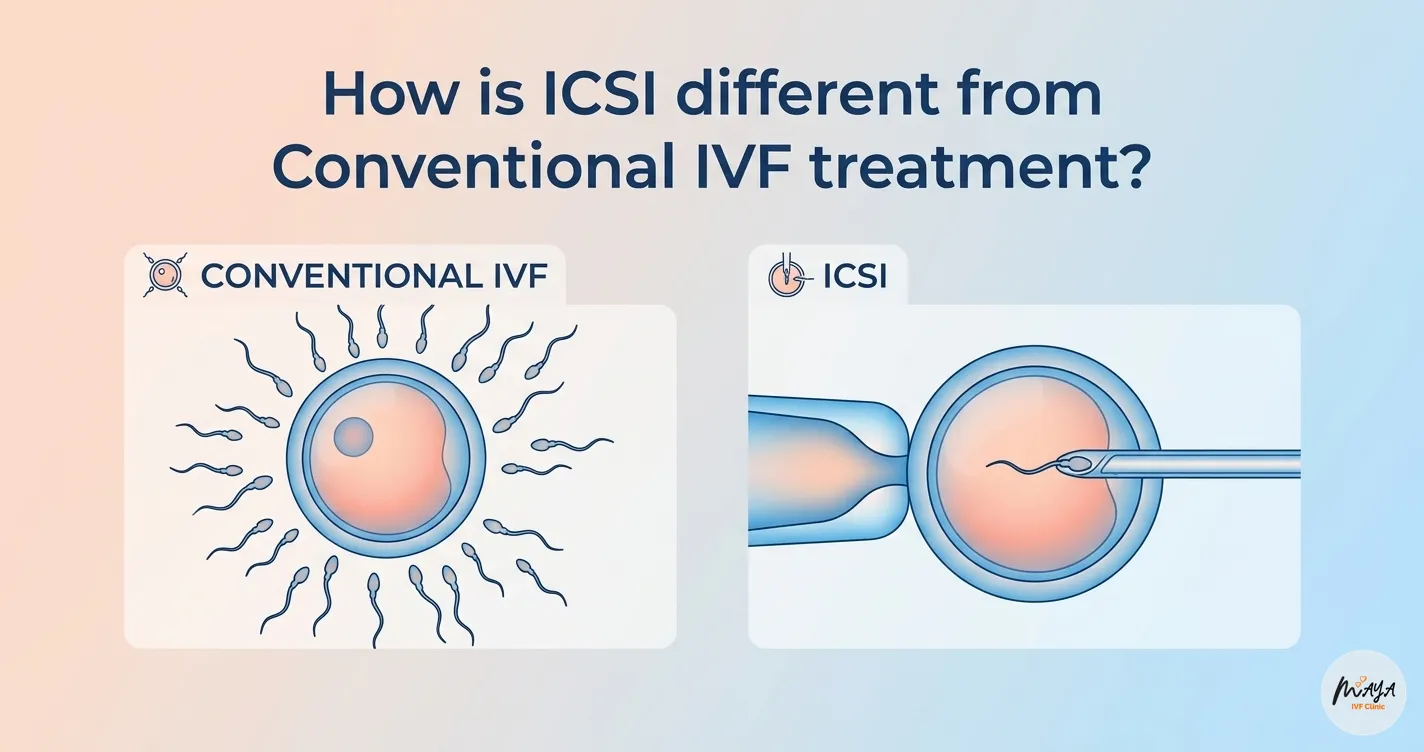
How is ICSI different from Conventional IVF treatm...
ICSI and Conventional IVF both are forms of assisted reproductive treatment (ART) in which eggs are...
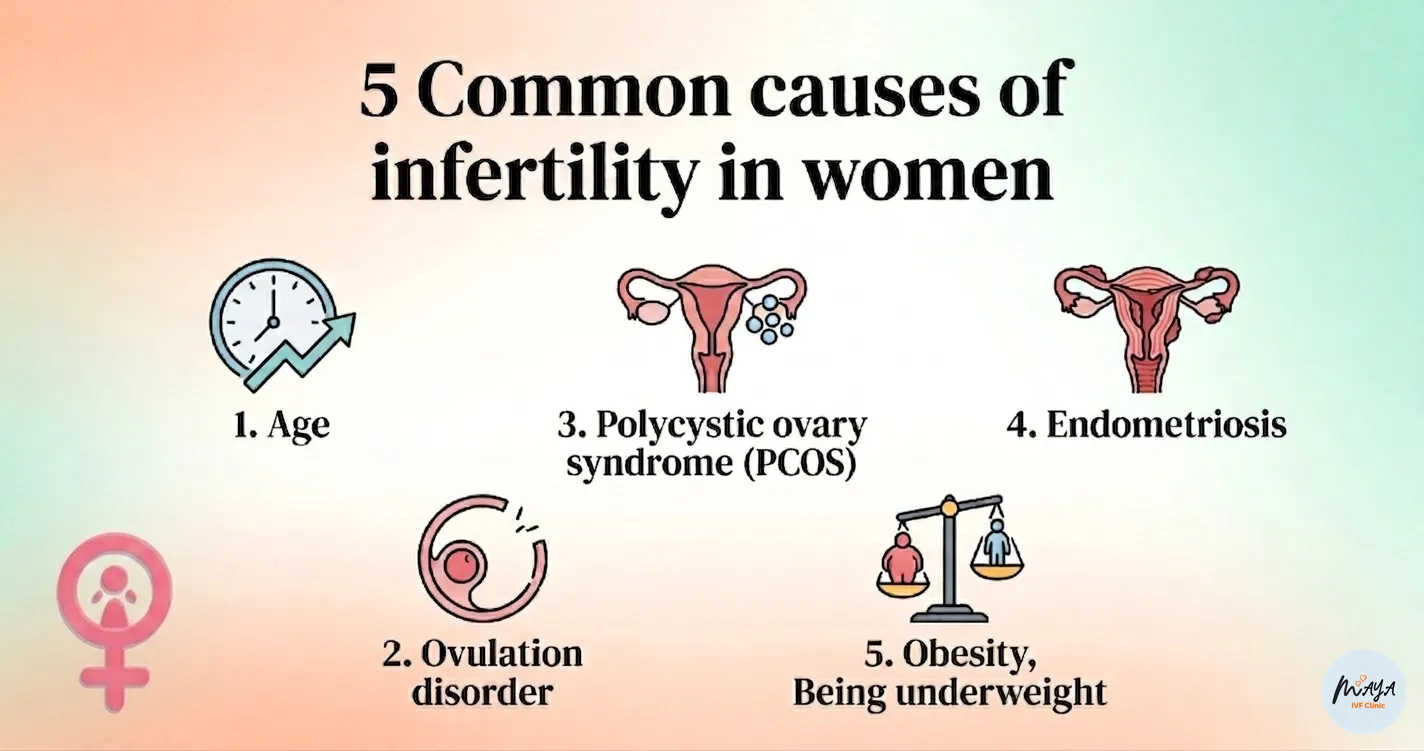
5 Common causes of infertility in women
A condition is diagnosed as infertility when a heterosexual couple is unable to conceive after one y...

 Nepal International Fertility and Laparoscopic Centre (NIFLC).
All rights reserved.
Nepal International Fertility and Laparoscopic Centre (NIFLC).
All rights reserved.